Graft numbers are the language of hair restoration, but they are easy to misread. A figure on its own says little until you know what area it needs to cover, how thick your hair is and how much the donor zone can spare. This guide walks through what 1,000, 2,000 and 4,000 grafts typically achieve, so the numbers in a consultation start to make sense.
What a Graft Actually Is
A graft is a follicular unit, a natural cluster of usually one to four hairs that grow together. Surgeons extract these units from the back and sides of the head, where hair is generally resistant to the hormone that drives male pattern baldness, and place them in thinning areas.
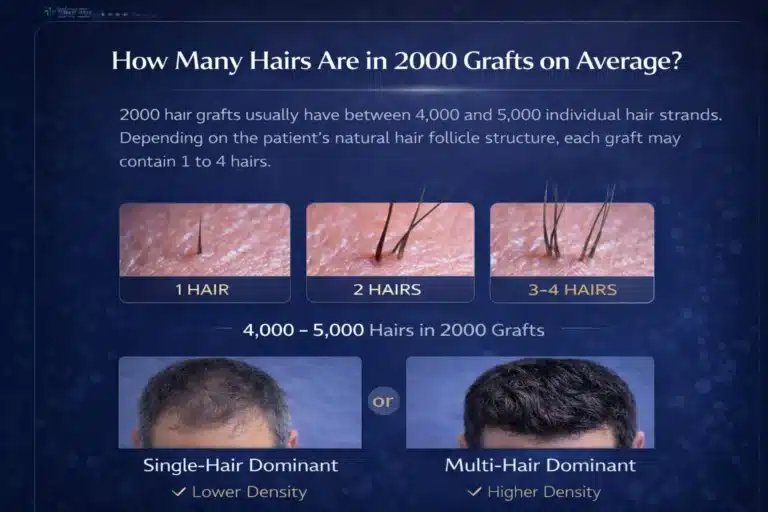
Because grafts contain different numbers of hairs, 2,000 grafts might mean roughly 4,000 to 5,000 individual hairs. Single-hair grafts are normally used at the very front for a soft hairline, while multi-hair grafts add body further back.
Around 1,000 Grafts: Targeted Work
A session of this size is usually aimed at a specific, limited area. Typical uses include lowering or refining a hairline, filling receding temples or adding density to a small patch. It can also be used to repair or soften an older transplant. People researching 1000 grafts cost are often early in their hair loss and want a subtle change rather than a transformation.
The procedure is shorter, and recovery is often a little easier, but the visual effect depends heavily on where the grafts go. Spread across a wide area, 1,000 grafts will look thin.
Around 2,000 Grafts: The Frontal Zone
This is a common middle ground for men with moderate recession. Around 2000 grafts can typically rebuild a hairline and part of the front third of the scalp with reasonable density. For many men at Norwood stage 3, this level frames the face without heavy demands on the donor area.
Factors that change the outcome
- hair calibre: thick hair covers more scalp per graft than fine hair
- curl or wave, which creates more visual volume
- contrast between hair and skin colour
- how much existing native hair remains in the area
Around 4,000 Grafts: Broad Coverage
A 4000 graft hair transplant is usually planned for advanced loss affecting the front, mid-scalp and sometimes part of the crown. It requires a dense donor area and a longer operating time, and some teams split it over two days. Patients should expect a more noticeable recovery, with more swelling in the first days and a larger donor area to care for.
At this level, the surgeon has to weigh coverage today against future needs. Hair loss often continues with age, and a donor area that has been heavily used leaves fewer options later.
How to Read a Graft Estimate
- Ask which zones the estimate covers and at what density.
- Ask how many grafts your donor area can safely provide over your lifetime.
- Check whether the estimate is a range and what decides the final number.
- Request a written plan rather than relying on a figure from photos alone.
Prices vary and depend on graft numbers, technique and what is included, so a written, itemised quote is the only reliable way to compare offers.
Conclusion
A thousand grafts refines, two thousand rebuilds the front and four thousand aims for broad coverage. The right number is the one that suits your pattern of loss, your hair characteristics and your donor supply, ideally agreed with a qualified doctor after an in-person or detailed video assessment.


